Some links in this post are affiliate links. If you buy something through one, Naturally Well Today may earn a small commission, and the price you pay does not change. How this works.
For years I made every cup of tea with water straight off the boil, because that is what the kettle does and I never thought to question it. Then a friend who grows her own chamomile handed me a cup that tasted nothing like what I was used to, softer and rounder, and the only difference was that she had let the water sit for a minute before pouring it. That small change sent me down a long, quiet path of paying attention to temperature.
Why temperature matters at all
Different plant materials release their flavor and aroma compounds at different rates depending on heat. Water that is too hot pulls everything out at once, including the bitter and astringent notes that are usually meant to come through slowly, if at all. Water that is too cool barely draws anything out, leaving a thin, pale cup that tastes mostly of warm water.
Delicate leaves and flowers, the kind with soft, thin structure, tend to prefer gentler heat. Sturdier material like roots, bark, and some seeds usually needs the full heat of a rolling boil to give up what it has. This is really the whole idea behind temperature. It is not a rule for its own sake, it is about matching the heat to how tough or tender the plant material is.
A simple way to judge temperature without a thermometer
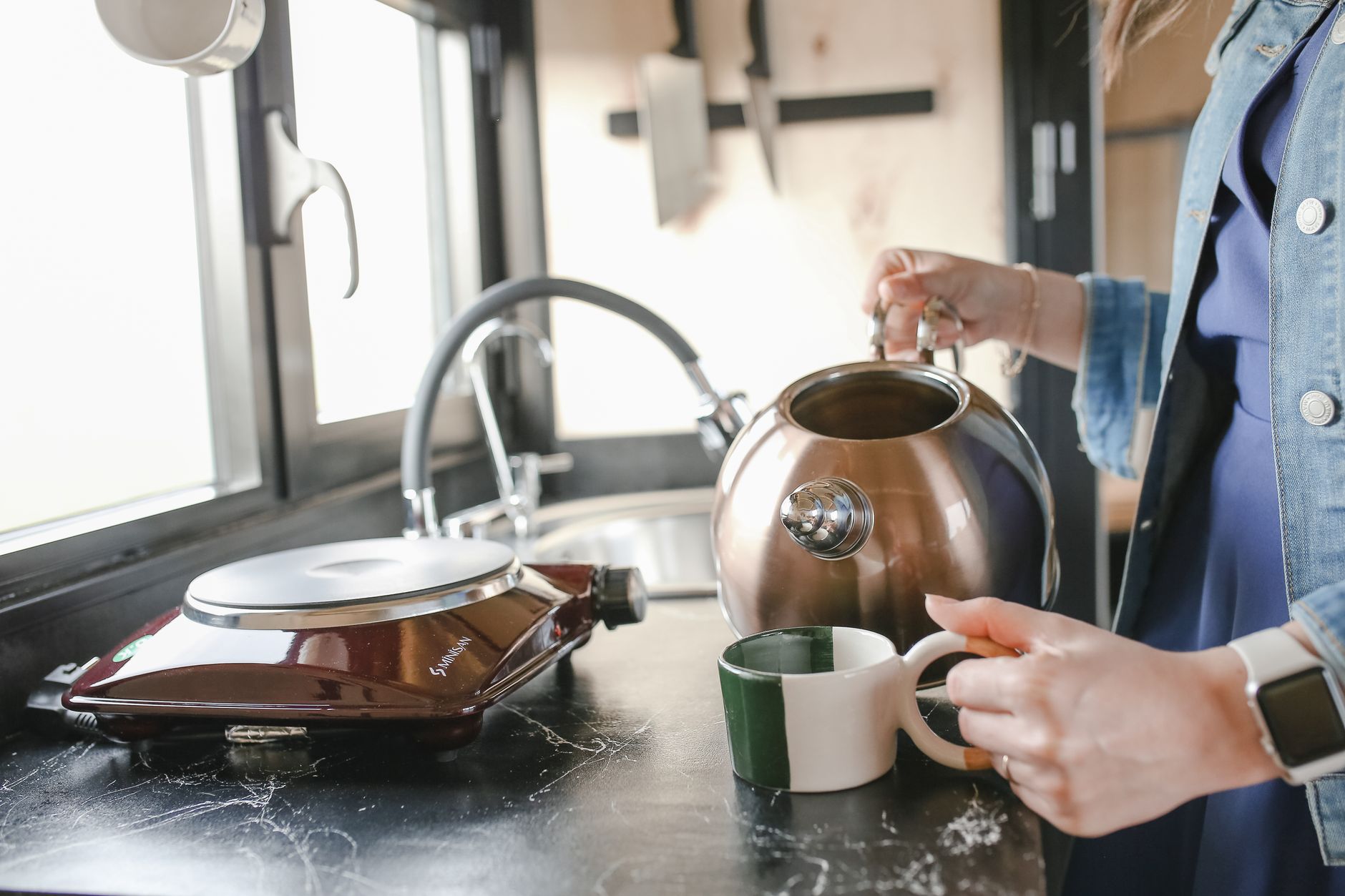
I do not own a tea thermometer, and I do not think you need one. Watching the kettle tells you almost everything.
- A gentle simmer, small bubbles rising slowly and no real motion on the surface, is on the cooler side and suits the most delicate leaves and flowers.
- A steady stream of bubbles moving upward but not breaking the surface hard is a middle point, useful for most leafy blends.
- A full rolling boil, water moving and slightly noisy, is what tougher roots, bark, and seeds usually want.
If you only ever boil water fully and pour it straight on, an easy adjustment is to just let it sit off the heat for a minute or two before pouring over more delicate leaves. That short pause brings it down without needing to watch bubbles at all.
What happens when the water is too hot
I have oversteeped delicate leaves in water that was too hot more times than I can count, and the result is fairly consistent. The cup turns bitter faster than expected, sometimes within a minute or two, and the more subtle notes get buried under that bitterness. It is not dangerous, just disappointing, and it is one of the more common reasons people decide they do not like a particular tea when the real issue was simply the water.
What happens when it is too cool
The opposite mistake is quieter and easier to miss. Water that has cooled too much before it touches the leaves will still make something that looks like tea, but the cup tends to taste watery and short, without much depth even after a longer steep. If you find yourself steeping something for a long time and it still tastes weak, temperature is often the first thing worth checking before blaming the leaves themselves.
How I think about it season by season
In warmer months I lean toward gentler steeps, letting the water cool a bit longer and often steeping for a shorter time, because I am usually looking for something lighter to sip slowly. In the colder months I let the water stay closer to a full boil and steep a little longer, since I want more warmth and body in the cup. Neither approach is a rule, just a preference that shifts with what feels right at the time.
Steeping time and temperature work together
Temperature does not act alone. How long the leaves sit in the water matters just as much, and the two adjust each other. A shorter steep at a hotter temperature can land in roughly the same place as a longer steep at a gentler temperature, which is part of why two people can follow completely different routines with the same tea and both end up happy with the result.
When I am unsure about a new tea, I start with a shorter steep than I think I need, taste it, and let it go longer if it still feels weak. It is much easier to steep something a little more than to fix a cup that has already gone bitter. Pulling the leaves out early and tasting along the way has taught me more about any given tea than reading instructions on a package ever did.
Reheating and second steeps
A cup that has gone lukewarm is not necessarily a lost cause. Gently warming it back up on the stove rather than in a microwave tends to keep the flavor closer to what it was originally, since a microwave can heat unevenly and push some parts of the cup past where they should be.
Many leaves, especially sturdier ones, can also be steeped a second time. The first steep pulls out the boldest flavors, and a second steep at a similar or slightly higher temperature often reveals something softer and different underneath, worth trying before you toss the leaves out. Delicate flowers and thin leaves usually do not have much left to give after one steep, but it costs nothing to try a short second pour and see.
The water is doing half the work. Paying attention to it changes more about the final cup than almost any other single choice you make.
None of this needs precision or equipment. It is really just about noticing. If a tea tastes bitter sooner than you expect, try slightly cooler water next time. If it tastes thin no matter how long you leave it, try slightly hotter, or let it sit a little longer before pouring it out. Over a few cups you get a feel for it, and the thermometer becomes unnecessary. That is the whole practice, one small adjustment at a time until the cup tastes like what you were hoping for, and the adjustment itself becomes a small, familiar part of making tea rather than an extra task on top of it.