Some links in this post are affiliate links. If you buy something through one, Naturally Well Today may earn a small commission, and the price you pay does not change. How this works.
Plastic wrap was one of those things I never questioned until I actually looked at how often I used it. Covering a bowl of leftovers, wrapping the end of a cucumber, sealing a dish going into the fridge for a day. Small uses, one after another, that added up to a new roll every month or so.
I did not set out to eliminate it completely. That felt like an unreasonable goal from the start, and I have learned that unreasonable goals tend to get abandoned within a week. Instead I asked a smaller question: for each use, was there something already in my kitchen that could do the same job.
Bowls and plates as lids
The simplest change had nothing to do with buying anything. A plate set on top of a bowl works as a cover for almost anything going into the fridge for a short time. It is not airtight, and it does not need to be for something that will be eaten within a day or two. I felt a little silly the first time I did this, as though I were missing some obvious reason it would not work. It worked fine. It still does.
Reusable containers for the rest
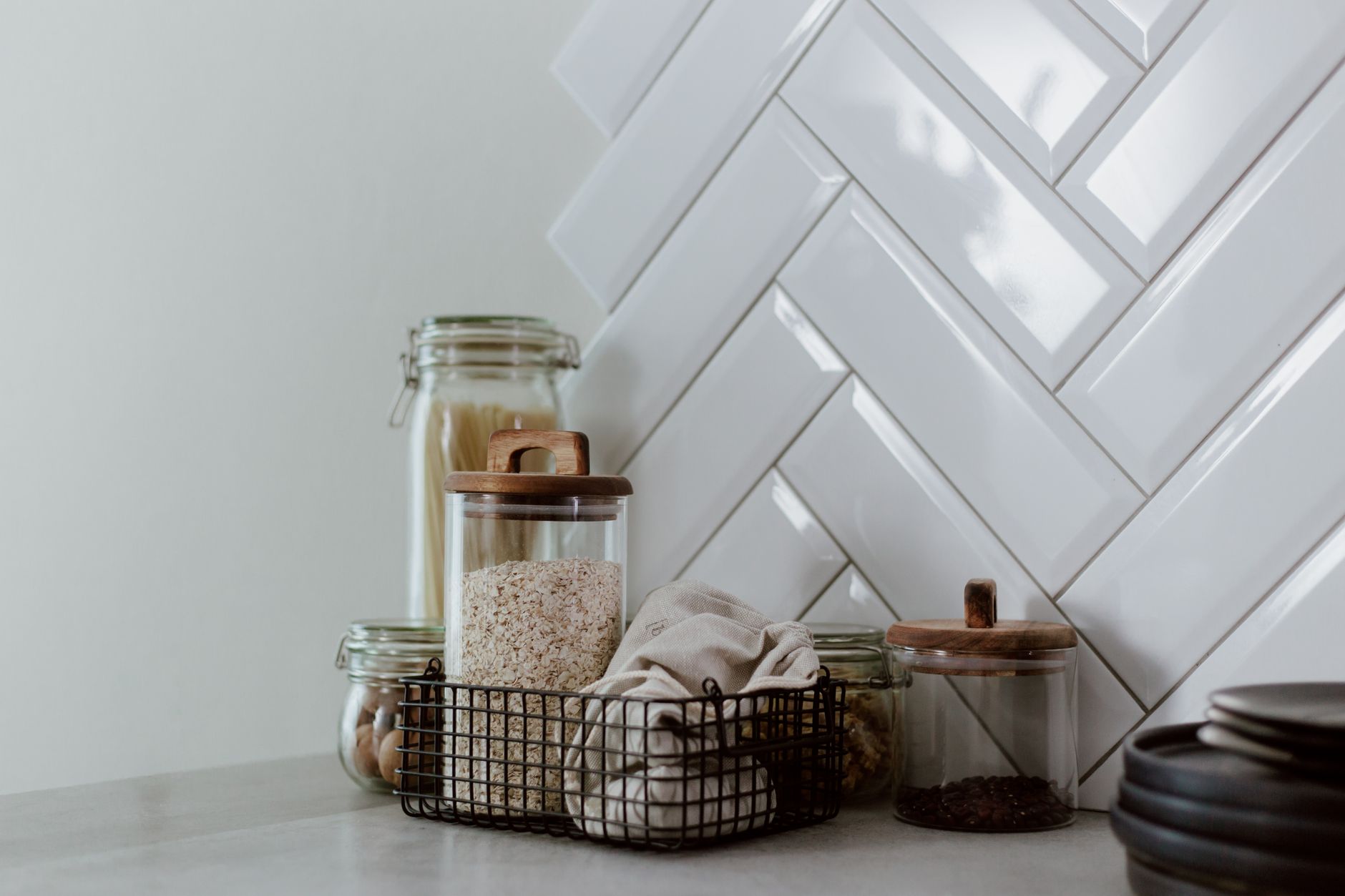
For anything staying in the fridge longer, or anything I wanted to bring somewhere, glass containers with lids took over. I did not buy a full new set. I used what was already in the cabinet, mostly containers that had come from store-bought sauces or jam, plus a few mismatched containers from years of accumulating them. None of it matches, and I have made peace with that.
- Wide glass jars for anything liquid or saucy
- Shallow containers with lids for leftovers that need reheating
- A plate over a bowl for the shortest-term, simplest cases
Beeswax wrap, and where it did not work for me
I tried beeswax wrap, since it is often mentioned as the direct replacement for plastic wrap. It worked reasonably well for wrapping a cut piece of cheese or covering the top of a jar. It did not work well for anything warm, since the wax softens with heat, and it did not work for anything with a strong odor, since the wrap seemed to hold onto the smell longer than I expected. I still use it occasionally, but it is not the single answer I thought it might be when I first bought it.
I mention this because it is easy to read about a swap, buy the recommended replacement, and assume it should work for everything the old product did. It usually does not. Plastic wrap was flexible enough to do many different jobs passably. Its replacements tend to each do one job well and the others poorly.
Nothing replaced plastic wrap on its own. A few different things replaced it together.
The case I never solved
Wrapping the cut end of a vegetable, like half an onion or the end of a cucumber, is the one use I have not found a satisfying alternative for. A container works if I have the right size on hand, but half an onion in a large container looks and feels wasteful in its own way. I have tried a small dish with a lid pressed against the cut face, and it works well enough, though it is not as tidy as a wrap.
I am including this because I do not think every use needs to have a perfect answer for a change like this to be worth making. I still buy a roll of plastic wrap now and then, mostly for that one purpose, and I do not think that undoes the rest of it. Less does not have to mean none.
What actually changed
The roll of plastic wrap in my kitchen now lasts most of a year instead of a month. That is the whole measurable result, and I think it is worth being plain about that rather than describing it as some larger transformation. It is a small number, but it is a number that moved in a direction I wanted, and it moved without much effort once the habits settled.
A slower approach if you want to try it
Rather than replacing everything in the kitchen at once, I would suggest noticing, over a week, each time you reach for plastic wrap. Ask what it is actually doing in that moment. Covering something going into the fridge. Wrapping something to travel. Sealing a cut piece of produce. Each of those might have a different answer, and finding those answers one at a time is a lot less overwhelming than trying to solve the whole category in an afternoon.
The point is not to feel bad about a box of plastic wrap sitting in a drawer. It is to notice, slowly, which of its uses have an easy substitute already sitting nearby, and which ones do not need to be solved right away.