Some links in this post are affiliate links. If you buy something through one, Naturally Well Today may earn a small commission, and the price you pay does not change. How this works.
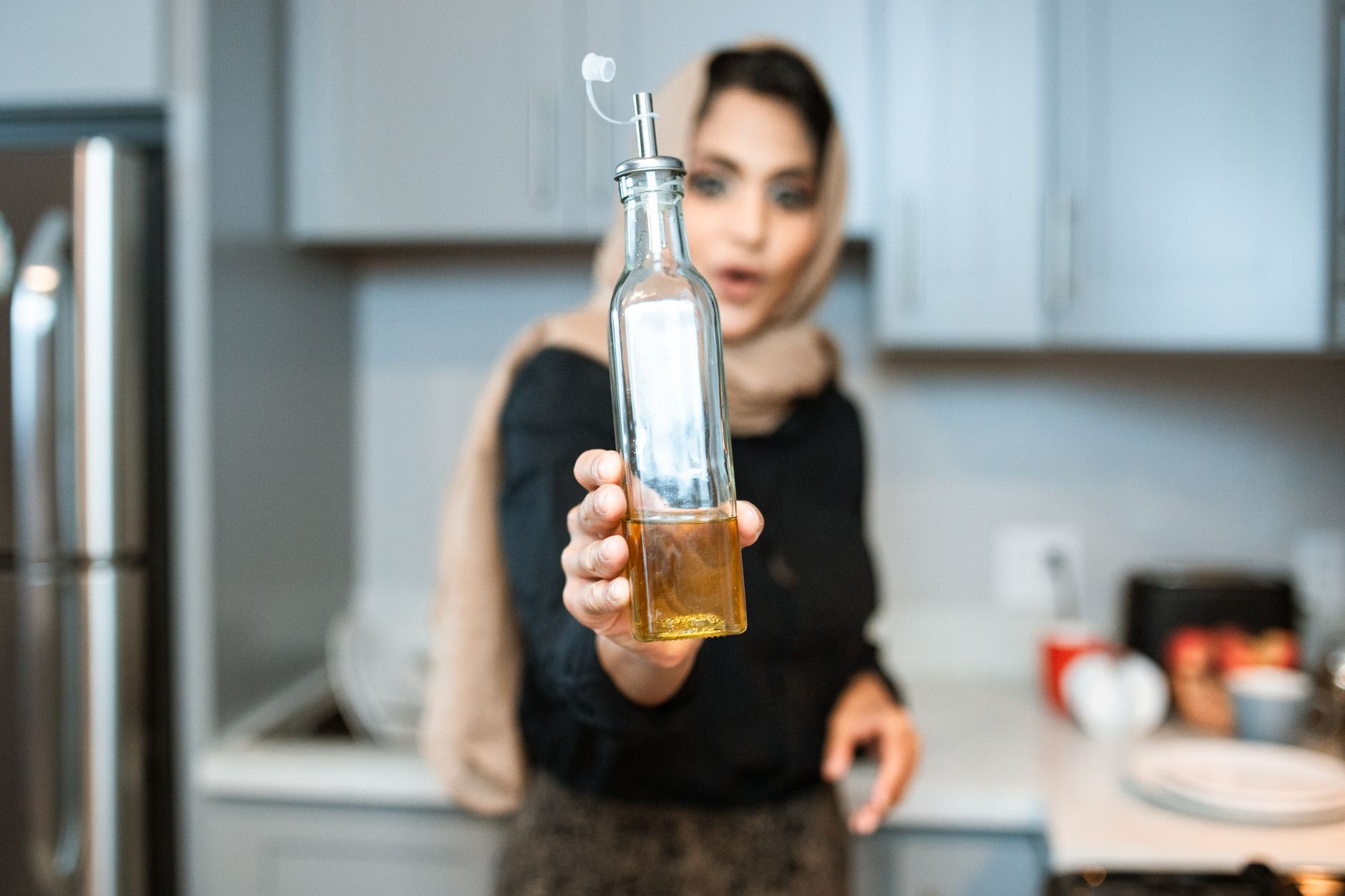
A bottle of olive oil tends to live right by the stove, tipped and poured without much thought, part of nearly every dinner without ever being the star of it. That familiarity can make it easy to overlook everything else the bottle is capable of, well beyond the pan.
What it does best, in the kitchen
Olive oil’s main strength is how well it carries flavor without overwhelming it. A good drizzle finishes a soup or a plate of vegetables in a way that feels both simple and intentional. For cooking at moderate heat, it holds up fine, though very high heat searing is usually better suited to an oil with a higher smoke point. Extra virgin varieties are best saved for dressings and finishing, where their flavor actually gets noticed, while a plainer olive oil works well for everyday sauteing.
It also plays a quiet role in baking, sometimes replacing butter in certain recipes for a moister, slightly denser crumb, especially in things like olive oil cakes or certain quick breads.
On the skin
Olive oil has been used as a simple moisturizer for a very long time, and for dry patches of skin, especially on elbows, heels, or hands, a small amount rubbed in can leave the skin feeling softer within a few minutes. It is heavier than most lotions, so a little goes further than it looks like it should.
Some people also use a small amount on cuticles before bed, since the oil sinks in slowly overnight and can leave the skin around the nails less dry by morning. This is a gentle, low effort habit rather than a fix for a skin condition. If dry or cracked skin does not improve with basic care, or looks infected, that is worth a visit to a doctor rather than more oil.
Around the house
A small amount of olive oil on a soft cloth can polish wood furniture, bringing back a bit of shine to a dull tabletop or cabinet. It should be used sparingly and buffed well, since too much left sitting on the surface can attract dust rather than repel it.
Squeaky hinges are one of the more satisfying uses. A few drops worked into a stiff door hinge or a creaky drawer track can quiet it down almost immediately, doing the same job as a can of specialized lubricant for a fraction of the cost.
Leather shoes, belts, and bags can also take a very small amount of olive oil worked in with a soft cloth to keep the material from drying out and cracking, though it is worth testing on a hidden spot first since darker leather can sometimes darken further.
In the garden shed
Garden tools that see a lot of use, like pruning shears or a hand trowel, can be wiped down with a lightly oiled cloth after cleaning to keep rust from creeping in, especially if they are stored somewhere damp. It is a small habit that extends the life of tools that would otherwise need replacing sooner than they should.
A cast iron pan that has lost some of its seasoning can also benefit from a thin coat of olive oil, wiped in and warmed gently in the oven. It is not a full re-seasoning process, but it can revive a pan that has gone a bit dull between deeper cleanings.
A note on which bottle to reach for
Not every olive oil in the pantry needs to be treated the same way. A pricier extra virgin bottle bought for its flavor is wasted on a hinge or a leather belt, and there is no harm in keeping a plainer, less expensive bottle around specifically for household tasks. Some people keep a small dedicated container near the toolbox or cleaning supplies rather than reaching for the one by the stove each time, which also avoids any confusion about which bottle has been used for what.
Nothing here is dramatic. Olive oil is simply a slow, steady, multi-purpose liquid that has earned its place in more rooms than the kitchen through centuries of ordinary use.
A few things worth knowing
- Plain olive oil is fine for most household uses. There is no need to use a good finishing oil on hinges or furniture.
- Store olive oil away from direct light and heat to keep it from turning rancid too quickly, whether it is meant for cooking or cleaning.
- Test any new surface, especially leather or finished wood, in a small hidden spot before using more broadly.
- Olive oil is not a treatment for a skin condition, a wound, or an ear or eye issue. Those situations call for a doctor, not a home remedy.
One bottle, many corners
It is a small shift in thinking, seeing the olive oil bottle as more than a cooking ingredient, but it changes how much use you get out of it. The same bottle that finishes tonight’s dinner can just as easily quiet a hinge or soften a dry heel, without ever needing to leave the kitchen shelf.