Some links in this post are affiliate links. If you buy something through one, Naturally Well Today may earn a small commission, and the price you pay does not change. How this works.
The first herbs I ever dried came out looking fine and smelling like almost nothing. I had hung a bundle of oregano in a bright kitchen window, which felt like the obvious place, and by the time it was fully dry it had lost most of the scent that made it worth growing in the first place. It took a few more rounds of trial and error to understand what actually preserves an herb’s character, and what quietly strips it away.
Harvest timing changes everything downstream
I used to think drying was where the real decisions happened, but the harvest itself sets the ceiling for how good the dried result can be. Herbs are strongest right before they flower, when the plant is putting its energy into leaf growth rather than seed production. Morning harvest, after any dew has evaporated but before the heat of the day, seems to give the best result, since the natural oils that carry scent and flavor are least likely to have evaporated off in the heat.
I also stopped washing herbs right before drying unless they were visibly dirty. Excess moisture on the leaf surface slows drying and can encourage mold in the early stages. If they do need rinsing, I pat them fully dry and give them time to air dry a bit before starting the actual drying process.
Light and heat are the real enemies
That first bundle of oregano taught me the hard way that a bright window is one of the worst places to dry herbs, even though it seems like a natural choice. Direct sunlight breaks down the same oils that give an herb its scent, so the visual drama of hanging herbs in a sunny window comes at a real cost. I now dry everything in a dark, dry spot with decent airflow, like the inside of a closet with the door left slightly open, or a paper bag with holes punched in the sides hung somewhere out of the light.
Heat works against scent the same way light does. A low oven or a dehydrator set too high will dry an herb faster, but it also cooks off a lot of what made it worth drying. If I use a dehydrator at all, I keep it on the lowest setting and check it frequently rather than trusting a timer.
Air drying, bundled or flat
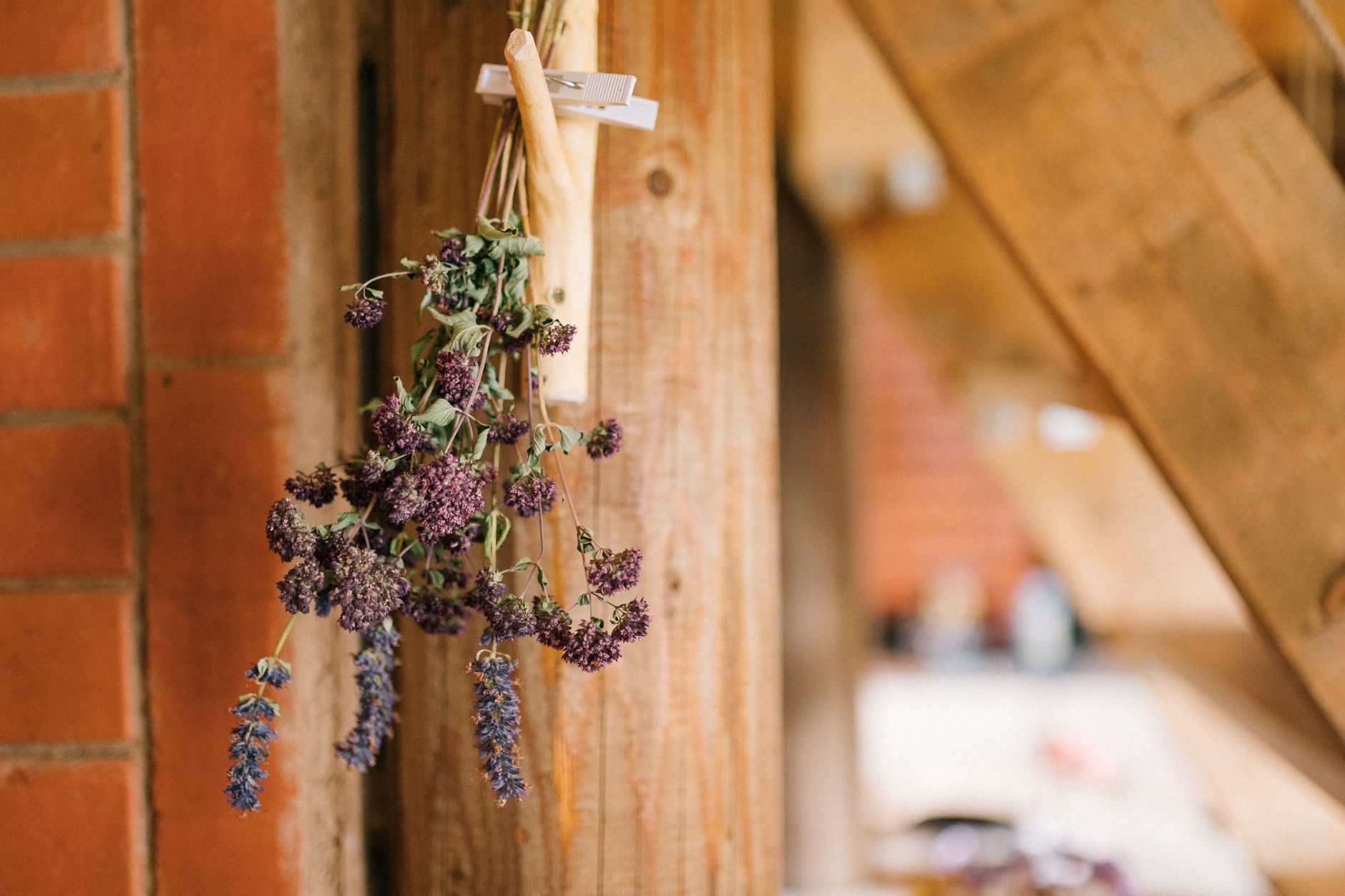
For herbs with sturdy stems, like rosemary, thyme, and oregano, I bundle four or five stems together with a rubber band, not string, since the rubber band tightens as the stems shrink during drying and keeps the bundle from loosening and falling. I hang these upside down in a dark, airy spot and leave them alone for one to two weeks, checking periodically rather than opening things up constantly.
Softer, more delicate herbs like basil and mint do better laid flat on a mesh screen or a paper towel, with space between leaves so air can move around them. Bundling these tends to trap moisture in the center of the bunch, which is where mold usually starts to show up first if it is going to.
I check a drying bundle by bending a leaf, not by looking at it. If it crumbles cleanly, it is ready. If it just folds or feels leathery, it needs more time, even if it looks dry from across the room.
Storing so the work does not go to waste
Once dried, I store leaves whole rather than crumbled, breaking them apart only right before I use them. Crumbling releases the oils sooner, which means more of the scent has already dissipated by the time I actually reach for the jar. Dark glass jars with tight lids, kept in a cabinet rather than near the stove, hold onto scent far longer than clear jars left on an open shelf.
I label everything with the date, since dried herbs do not last forever in terms of potency. Most of what I dry noticeably fades within about a year, even when stored well. It is not unsafe to use past that point, it just will not smell or taste like much anymore, and at that point it is really just green flakes taking up cabinet space.
What I would tell myself at the start
Dry in the dark, dry slowly, and do not judge readiness by looks alone. Those three things would have saved me several batches of pale, scentless herbs in my first year. The process rewards patience more than any specific piece of equipment does.
- Harvest in the morning, before flowering, before the heat of the day
- Dry away from direct light and high heat
- Bundle sturdy herbs, lay soft herbs flat with airflow
- Test readiness by crumbling a leaf, not by appearance
- Store whole, in dark glass, labeled with the date