Some links in this post are affiliate links. If you buy something through one, Naturally Well Today may earn a small commission, and the price you pay does not change. How this works.
For a long time I only grew herbs from seed, because that is what most gardening advice defaults to. It took a friend handing me a cutting of rosemary off her own plant, wrapped in a damp paper towel, for me to realize how much easier propagation from cuttings can be for certain herbs. It skips the slow, uncertain seedling stage entirely, and for a handful of common herbs it is genuinely more reliable.
Which herbs take well to cuttings
Soft stemmed herbs root the most easily. Mint, basil, oregano, and lemon balm will often root in plain water within a week or two. Woodier herbs like rosemary, sage, and thyme take longer and root better in soil or a light rooting medium rather than water, but they are still very doable once you know to expect a slower pace.
Herbs that grow from a single taproot, like cilantro or dill, do not propagate well from cuttings at all. Those are better started from seed, and trying to root a cutting from one is mostly a waste of a good stem.
Taking the cutting
I look for a stem that is healthy but not flowering, usually four to six inches long, cut just below a leaf node with clean scissors or a knife. I strip the lower leaves off, leaving just two or three sets at the top. Removing too few leaves means the cutting spends its energy trying to support growth it cannot yet sustain with no roots.
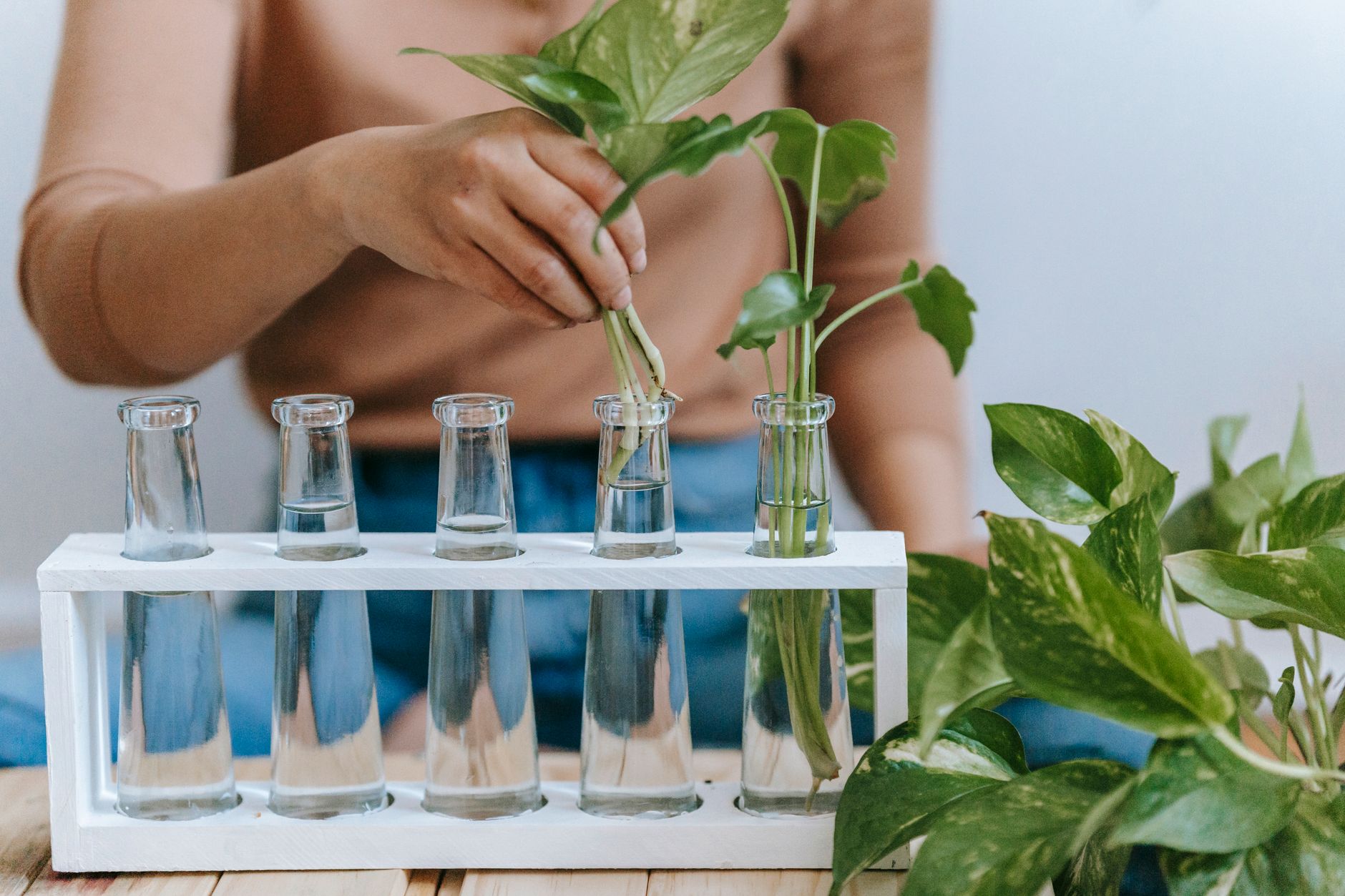
For soft stemmed herbs, I put the cutting in a small glass of water, keeping the leaves above the waterline and the stripped stem submerged. I change the water every couple of days so it stays clear rather than cloudy. For woodier herbs, I dip the cut end in a rooting hormone if I have some on hand, though it is not strictly necessary, and place it in a small pot of well draining, slightly moist soil.
What patience actually looks like here
Basil and mint are fast. I usually see small white roots within five to ten days in water. Rosemary and sage are a different story entirely, sometimes taking three to six weeks before there is any visible root growth, and during that stretch the cutting can look completely unchanged, which is unsettling if you do not expect it.
I lost my first three rosemary cuttings because I gave up on them around week two, assuming nothing was happening. The fourth one I left alone on a windowsill and forgot about, and that was the one that rooted.
Light matters more than most people expect during this stage. Bright, indirect light keeps the cutting alive without pushing it to put energy into new leaf growth before it has roots to support that growth. Direct hot sun on a cutting sitting in a small glass of water can overheat the water and stress the stem.
Moving a rooted cutting to soil
Once roots reach about an inch or two long, I move the cutting into a small pot with a light, well draining potting mix. The transition from water roots to soil roots is a little rough on the plant, since water roots are structured differently than soil roots. I keep the soil consistently moist for the first week or two after transplanting, tapering off once I see new leaf growth, which is the clearest sign the plant has settled in.
Why I still keep some seed packets around
Cuttings are not a replacement for seed starting, just a different tool. Cuttings give you a genetic copy of the parent plant, which is useful when you already like how a particular plant tastes or grows. Seeds give you more variation and are the only real option for taprooted herbs. I use both now, depending on what I am trying to grow and whether I have access to an established plant to take a cutting from in the first place.
Common mistakes I made early on
The biggest one was letting a cutting sit too long before putting it in water or soil. A stem that dries out even slightly on the cut end has a much harder time rooting, so I try to move quickly from cutting to water, ideally within a few minutes. If I am gathering several cuttings at once, I keep a small jar of water nearby to drop each one into right away rather than collecting them all on a counter first.
I also used to crowd too many cuttings into one glass, which seemed efficient but usually ended with at least one or two rotting before they rooted. Now I give each cutting its own small container, or space them out enough in a wider jar that leaves are not pressed against each other under the waterline. Any leaf that ends up submerged tends to break down and cloud the water quickly.
Another mistake was expecting the same rooting time across every herb, which set me up to give up early on the slower ones. Keeping a simple written note of when I took each cutting, taped near the window where they sit, has stopped me from second guessing whether something is taking an unusually long time or is right on schedule for its type.
A small setup that works
These days my propagation station is nothing more than a windowsill with a row of small glass jars, each labeled with masking tape and a date. Nothing about it needs to be elaborate. The consistency of checking in on the same handful of jars every few days, refreshing water and noticing small changes, has done more for my success rate than any specific product or rooting powder I have tried along the way.
- Soft stemmed herbs root fastest: mint, basil, oregano, lemon balm
- Woody herbs like rosemary and sage take weeks, not days
- Taprooted herbs like cilantro and dill do not propagate from cuttings
- Strip lower leaves, keep two or three sets at the top
- Change water regularly and use bright, indirect light