Some links in this post are affiliate links. If you buy something through one, Naturally Well Today may earn a small commission, and the price you pay does not change. How this works.
I spent the first few years of growing herbs mixing them up. Thyme and oregano looked close enough from a distance that I would pinch a leaf, smell it, and still not be sure. What finally helped was not a chart or an app. It was slowing down enough to notice three things every time: the shape of the leaf, the way it feels between my fingers, and what happens when I crush it and wait a second before smelling.
Start with the leaf, not the smell
Smell is the first thing most people reach for, but it can be misleading if you rush it. A better first step is just looking. Basil leaves are broad, soft, and slightly glossy, often with a gentle point at the tip. Thyme leaves are tiny, narrow, and almost woody looking, growing along thin stems that feel a little stiff. Oregano sits in between, with small oval leaves that are fuzzier than thyme and rounder than basil.
Rosemary is one of the easier ones once you have seen it a few times. The leaves look almost like short pine needles, dark green on top and pale underneath. Sage, by contrast, has soft, wide, slightly wrinkled leaves with a grayish green cast, almost like suede if you touch it.
Texture tells you almost as much as scent
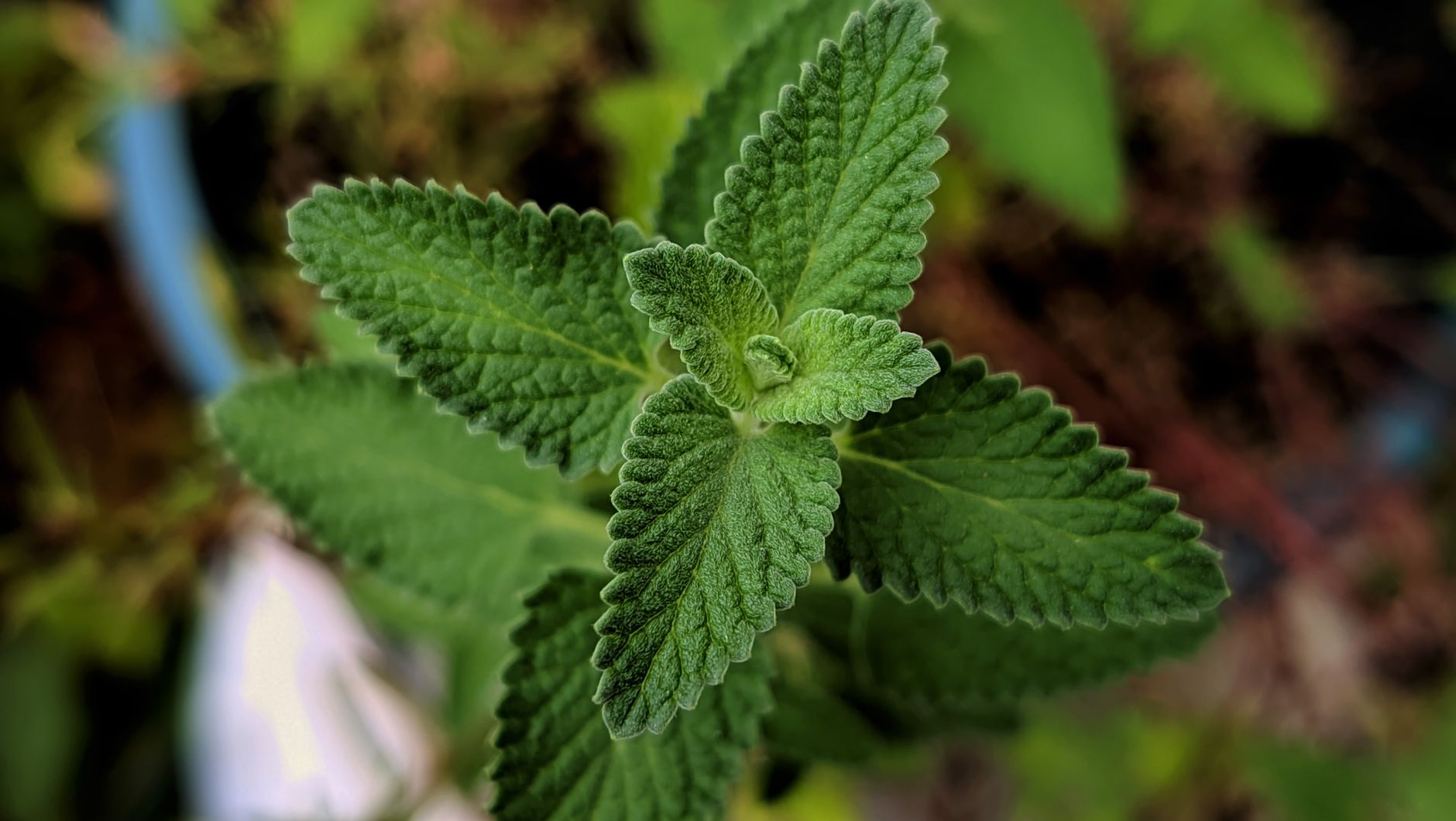
I did not expect texture to matter as much as it does. Mint leaves are crinkled and have small teeth along the edges, and they feel cool and a little damp even in dry weather. Lemon balm looks similar to mint at a glance, which trips people up constantly, but its leaves are softer and less sharply toothed, and the stem is a bit more square if you roll it between your fingers.
Parsley and cilantro get confused often too, especially in a crowded garden bed. Flat leaf parsley has leaves that are more pointed and slightly glossy. Cilantro leaves are more rounded, almost lacy at the edges, and the whole plant tends to sit lower and bushier.
Crush, wait, then smell
The trick that helped me most was not smelling immediately after crushing a leaf. I crush a small piece between two fingers, wait about five seconds, then bring it close. The first burst of scent right after crushing can be sharp and similar across a few herbs, but the scent that settles in after a moment is more distinct. Thyme settles into something warm and slightly medicinal. Oregano stays sharper and a little peppery. Basil turns sweeter, almost like clove in the background.
I keep a small notebook by the garden bed, just a line or two for each plant: leaf shape, how it felt, what it smelled like after a few seconds. Reading it back months later taught me more than any single walk through the garden did.
Where I still get it wrong
Young seedlings are the hardest stage for me. Many herb seedlings look almost identical for the first few weeks, with small round cotyledon leaves that give no hint of what the mature plant will look like. If I am not sure what I planted where, I let the plant grow a bit longer before I touch or use any part of it. There is no harm in waiting for true leaves to form before making an identification.
I also try not to trust identification from a single photo or a quick glance, especially with anything I am not already familiar with. Some plants that look herb-like from a distance are not culinary herbs at all, and a few can be genuinely harmful to touch or ingest. If I am identifying something I did not plant myself, from a garden center tag I trust, I treat it as unknown until I can compare it in person against a plant I already know well, or ask someone with more experience than me.
A slower way to learn
None of this happened quickly for me. I learned mint from years of it taking over one corner of a bed. I learned rosemary because it survived a winter that killed everything else nearby. The plants that stuck with me are the ones I handled often, not the ones I looked up once and moved on from.
If you are just starting, I would pick two or three herbs that look genuinely different from each other, live with them for a season, and let your hands learn the texture before you worry about the rest. The rest tends to follow once you trust what your fingers already know.
- Look at leaf shape and edge first, before smell
- Touch for texture: waxy, fuzzy, crinkled, or stiff
- Crush, wait a few seconds, then smell
- Wait for true leaves before identifying young seedlings
- Treat anything unfamiliar as unknown until confirmed