Some links in this post are affiliate links. If you buy something through one, Naturally Well Today may earn a small commission, and the price you pay does not change. How this works.
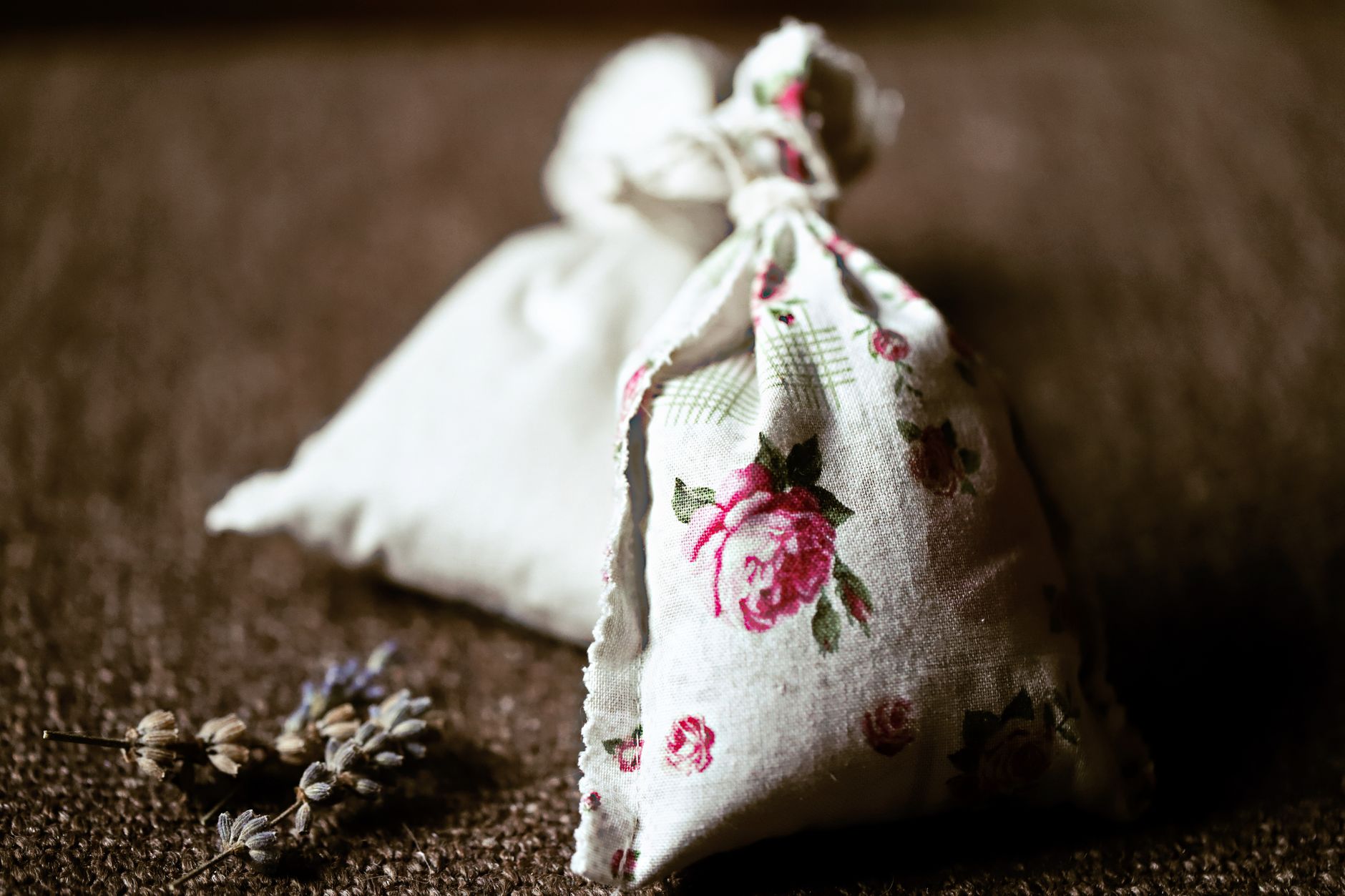
The sachets I make now are small, about four inches square, sewn from plain cotton muslin, and filled with dried lavender buds rather than whole stems. I tried whole dried stems in an early batch, thinking it would look nicer through the fabric, and the woody stems poked through the loose weave almost immediately, which meant sharp little points against drawer linens. Stripped buds, the small purple-gray flower heads pulled off the stem, sit much more comfortably inside a closed bag and do not poke through anywhere near as often.
For a single sachet that size, I use about two tablespoons of dried buds, which is enough to fill the bag loosely without overstuffing it. Overstuffing turned out to be its own mistake in an early attempt, since a tightly packed sachet does not let air move through the fabric as easily, and the scent seemed to stay muted rather than diffusing out into the drawer the way a more loosely filled bag does.
Sewing the bags
I cut two squares of muslin, pin them right sides together, and sew around three sides on a machine, leaving the fourth side open. After turning it right side out, I fill it with the lavender buds using a small funnel, which is much less messy than trying to pour directly from a measuring spoon. The open side gets folded in and either hand-stitched closed or tied shut with a bit of cotton string, which also gives you something to hang the sachet from if you want it clipped to a closet rod rather than tucked flat in a drawer.
Hand sewing the whole thing is entirely possible if you do not have a machine, it just takes longer, maybe twenty minutes per sachet instead of five. A simple running stitch is plenty sturdy for something this small and light.
Where the scent actually lasts, and where it does not
In a closed drawer, especially one that does not open often, like a drawer of off-season linens, I have found the scent stays noticeable for around three to four months before it fades to something faint. In a closet that gets opened and closed daily, disturbing the air around the sachet constantly, the scent fades faster, closer to six to eight weeks. This matched what I expected once I thought about it, since more air movement means the fragrance oils in the buds disperse and dissipate more quickly rather than staying concentrated in a small enclosed space.
Once a sachet stops smelling like much, I have found the simplest fix is not to try to add more essential oil to the old buds, which I tried once and found gave an odd, uneven scent, sharp in some spots and flat in others. It works better to just empty the bag and refill it with a fresh batch of dried buds. The muslin bags themselves hold up to being emptied and refilled many times over.
The stems poking through the first batch was a small, almost funny failure, but it taught me more about the fabric weave than any amount of reading would have.
A note on drying your own lavender
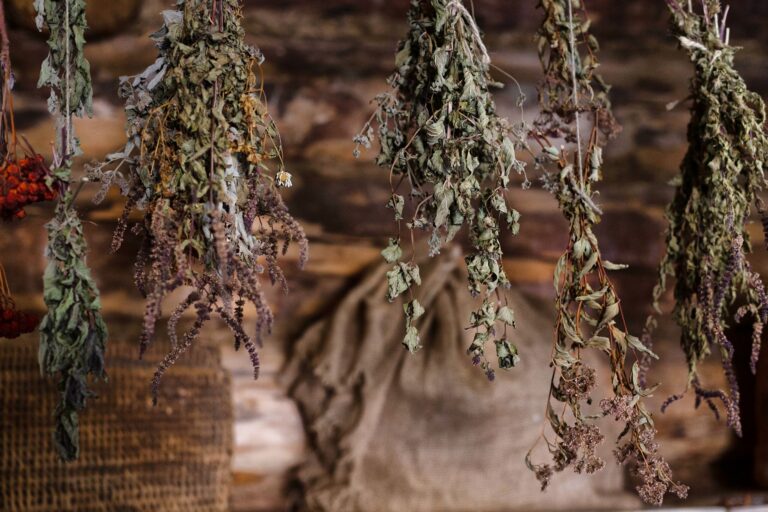
If you are drying lavender from a garden rather than buying dried buds, I have found it needs to be genuinely dry, brittle enough that the buds separate easily from the stem with a light rub between your fingers, before it goes into a sachet. Buds that still have any moisture in them, even a small amount, can lead to a faintly musty smell developing inside the closed bag over the following weeks, which is unpleasant enough that I have had to discard a couple of sachets made too early in the drying process. When in doubt, giving the lavender another few days to dry fully is worth the wait.
Using them well
I tuck sachets in with folded sweaters, in the corners of drawers, and one hangs from a hook inside a coat closet. They are a small, quiet way to keep enclosed spaces smelling pleasant rather than stale, nothing more than that. I do not use them anywhere near food storage, since I would rather keep a clear line between a scented household item and anything that gets eaten, even though the lavender itself is a plant that shows up in some culinary uses elsewhere.
This is a slow, small project, more suited to an afternoon with the radio on than anything that needs to be finished quickly. A batch of six or eight sachets, enough for several drawers and a closet, takes me most of an hour once the buds are ready, and they make a nice small gift as well, tied with a bit of ribbon instead of the plain string I use for my own.
Choosing fabric
Plain cotton muslin is what I use most, mostly because it is inexpensive and the weave is loose enough to let scent through steadily without being so open that buds work their way out. I tried a tighter cotton broadcloth once, left over from another project, and the scent came through much more faintly, muted by the denser weave. A sheer fabric, on the other end of things, let scent out quickly but also let small bud fragments through onto the drawer liner, which was its own small mess to deal with. Muslin has been the steadiest middle ground of the fabrics I have tried.
Color and pattern do not affect how the sachet performs, so that part is really just personal taste. I keep a small stack of plain unbleached muslin on hand specifically for this, cut into squares ahead of time so that starting a new batch does not require any extra prep beyond measuring the lavender.
A few small adjustments over time
After enough batches, I started sewing a double line of stitching along the three closed sides rather than a single line, since a couple of early sachets split slightly at a seam after being handled and moved between drawers for a few months. The double stitching adds barely any time to the sewing and has held up much better since. I also switched from a running stitch by hand to using the sewing machine for anything beyond a single sachet, purely because it is faster and holds just as well for something this small and light.
None of these were dramatic changes. They were the kind of small corrections that come from making the same simple thing several times over and noticing, quietly, what held up and what did not.